

Research from The London PANS Clinic
We are committed to adding to the evidence for PANS and PANDAS, and to making sure the experiences of the children and families we work with help shape that evidence. We work with academic partners on research projects and share our findings at national and international scientific meetings.

1. PhD Research
The London PANS Clinic is proud to support doctoral research into PANS and PANDAS in collaboration with Anglia Ruskin University.
The research project aims to better understand the underlying mechanisms of PANS PANDAS to evaluate treatment outcomes. Researchers will be investigating whether simple, non-invasive techniques of measuring brain activity and physiological changes are linked to changes that a child experiences when they are in a symptom flare. These techniques will then be used as part of a trial assessing antibiotics as a treatment for PANDAS, in which children’s behavioural and neural responses to antibiotics will be studied.
This research is important for children with PANS PANDAS as we hope it will tell us more about the best ways to treat these conditions. One of the key reasons that PANS PANDAS is poorly understood by many medical professionals is due to a lack of knowledge about what these conditions are and how to treat them. Our aim is that this research on antibiotics can contribute to raising the awareness of PANS PANDAS and to provide objective scientific evidence demonstrating that these conditions are treatable.
The research team are currently in the process of designing experiments, and their next step will be to carry out the studies that identify the neural and behavioural changes associated with flares. They plan to recruit both children with PANS PANDAS and healthy children, so that they can compare the results between these two groups and identify what changes take place in PANS PANDAS. We’ll keep you updated about how families can get involved with this research soon.


Cara (left) is undertaking her PhD in a jointly funded project between The London PANS Clinic and Anglia Ruskin University, under the supervision of Associate Professor Flavia Cardini (right). This PhD project will be focused on PANS PANDAS.
2. Open University Collaboration
3. Nutritional and Metabolic Research
4. I²AM in Clinics: An International Research Initiative
I²AM in Clinics is a collaborative research programme led by The Alex Manfull Fund (TAMF) and MIT's Tal Research Group (TRG), bringing together a network of clinics to advance understanding of infection-associated and immune-mediated (I²AM) conditions.

5. Poster Presentations
Our team regularly shares its work at national and international scientific meetings.
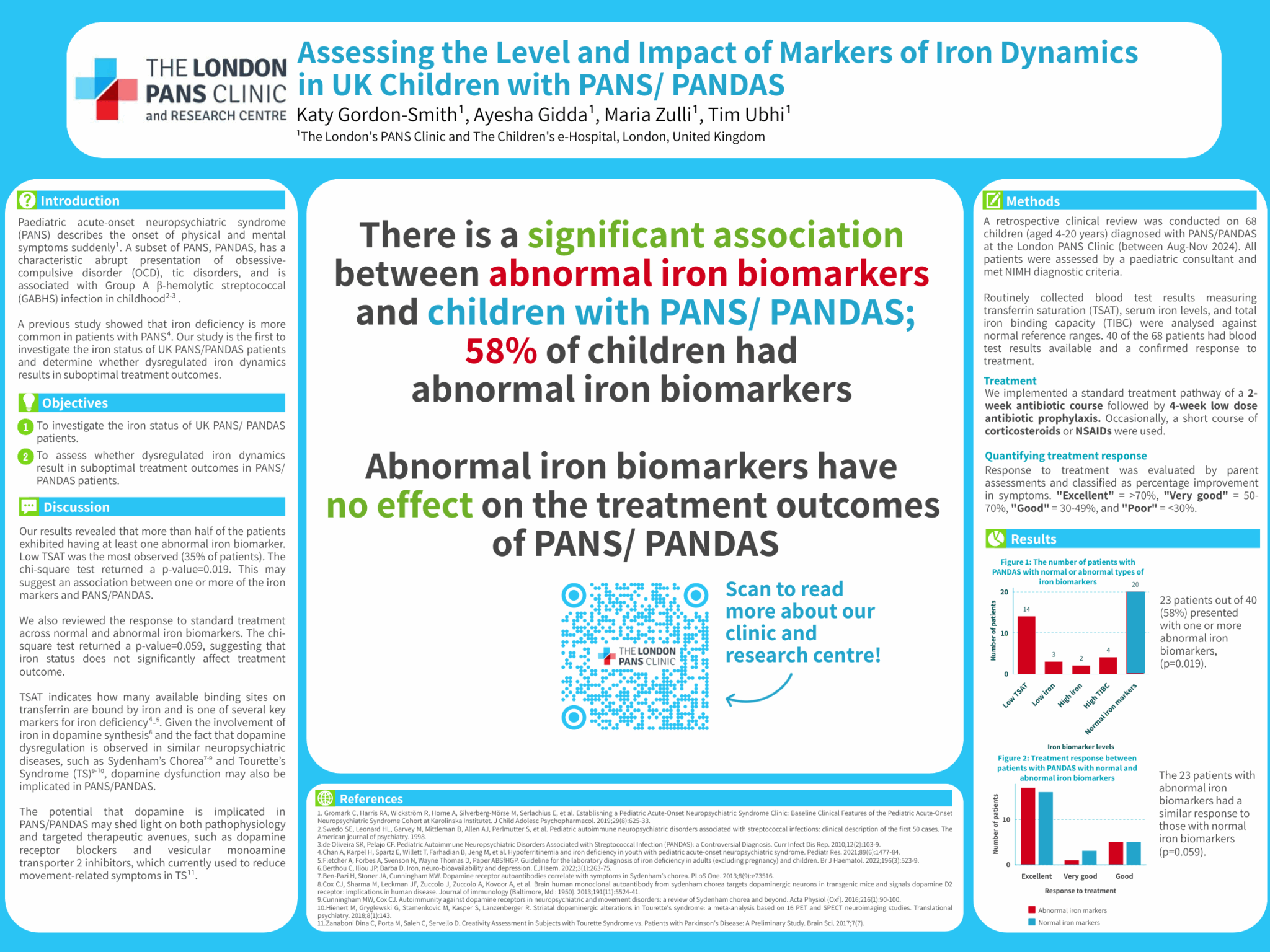
Recent poster presentations include:
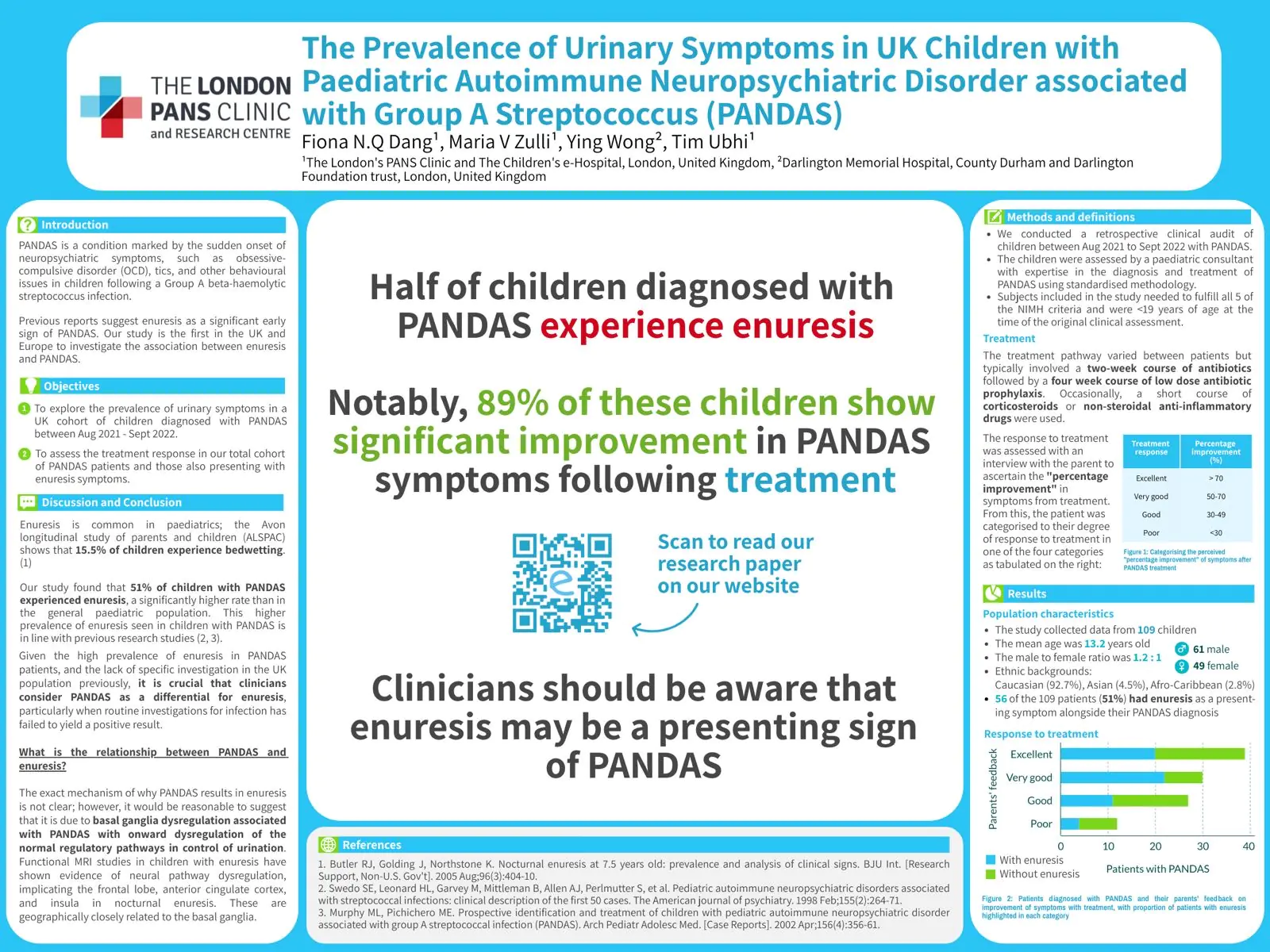
AACAP Annual Meeting, Seattle, 2024:
The Prevalence of Urinary Symptoms in UK Children with PANDAS. A retrospective audit of urinary symptoms in children with PANDAS seen at The London PANS Clinic.
AACAP Annual Meeting, Chicago, October 2025 (New Research posters):
Three posters on symptom prevalence, iron biomarkers and sex differences in PANS and PANDAS.